

Hard Water Problems in Texas: Signs Your Home Needs a Water Treatment System
Quick Answer
Hard water problems are common throughout Texas due to naturally high levels of calcium and magnesium in the water supply. While these minerals are generally safe to drink, they can leave behind scale buildup that damages plumbing, reduces appliance efficiency, causes dry skin and hair, and makes cleaning more difficult. Installing a water softener in Texas along with whole house water filtration can help protect your home, improve water quality, and extend the life of your plumbing and appliances. Quality Home Products of Texas helps homeowners find the right solution through professional water testing and customized water treatment systems.
Table of Contents
- What Is Hard Water?
- Why Is Hard Water So Common in Texas?
- 8 Signs Your Home Has Hard Water Problems
- How Hard Water Affects Your Home and Appliances
- How to Test for Hard Water in Your Home
- Choosing the Right Water Treatment System
- Water Treatment System Benefits
- Water Softener vs. Whole House Water Filtration
- Frequently Asked Questions
Key Takeaway
Hard water doesn’t usually cause one major problem overnight. Instead, it quietly builds up over time, reducing the efficiency of your plumbing and appliances while making everyday tasks like cleaning, showering, and doing laundry more difficult. Identifying the signs early can help you protect your home and avoid costly repairs.
What Is Hard Water?
Hard water is water that contains elevated levels of naturally occurring minerals, primarily calcium and magnesium. As groundwater moves through limestone and other mineral-rich rock formations—a common occurrence throughout Texas—it dissolves these minerals before reaching your home’s plumbing system.
Although hard water is generally safe to drink, the minerals it contains can create a variety of problems throughout your home. Every time water flows through your pipes, water heater, dishwasher, washing machine, or faucets, tiny amounts of mineral deposits are left behind. Over time, these deposits accumulate into hard, chalky scale that reduces efficiency, increases maintenance needs, and shortens the lifespan of expensive appliances.
Many homeowners don’t realize they’re dealing with hard water until they begin noticing white spots on dishes, soap that won’t lather, stiff laundry, or scale buildup around faucets and showerheads. Recognizing these signs of hard water early can help you determine whether your home could benefit from a water treatment solution.
Why Is Hard Water So Common in Texas?
Many areas of Texas have some of the hardest water in the country, making hard water problems a common concern for homeowners statewide. Much of the state’s drinking water comes from underground aquifers that naturally pass through limestone, chalk, and other mineral-rich geological formations before reaching municipal water systems.
Because these water sources absorb calcium and magnesium along the way, many homeowners experience hard water problems regardless of whether their water comes from a city utility or a private well.
Some of the most common issues associated with hard water include:
- Mineral buildup inside plumbing pipes
- Reduced water heater efficiency
- White spots on dishes and glassware
- Soap scum on sinks, showers, and tubs
- Dry skin and dull hair after bathing
- Appliances that wear out faster than expected
Fortunately, these issues can often be addressed with a professionally installed water treatment system. Depending on your home’s water quality, this may include a water softener to reduce hardness minerals, whole house water filtration to improve overall water quality, or a combination of both.
At Quality Home Products of Texas, we’ve helped thousands of homeowners improve their water quality with customized water treatment solutions. Because every home’s water is different, we believe the best solution starts with understanding your water and recommending a system designed specifically for your needs.
Did You Know?
Hard water minerals aren’t typically harmful to drink, but they can gradually reduce the efficiency of your plumbing, water heater, dishwasher, and other water-using appliances. Over time, that mineral buildup can lead to higher energy bills, increased maintenance, and premature equipment replacement.
8 Signs Your Home Has Hard Water Problems
Hard water often develops gradually, making it easy to overlook until it begins affecting your home’s plumbing, appliances, and daily routine. If you’ve noticed any of the following, your home may benefit from a water treatment solution.
1. White Spots on Dishes and Glassware
Cloudy spots or a chalky residue on dishes, drinking glasses, and silverware are among the most common signs of hard water. These spots are left behind when mineral-rich water evaporates after washing.
2. Scale Buildup on Faucets and Showerheads
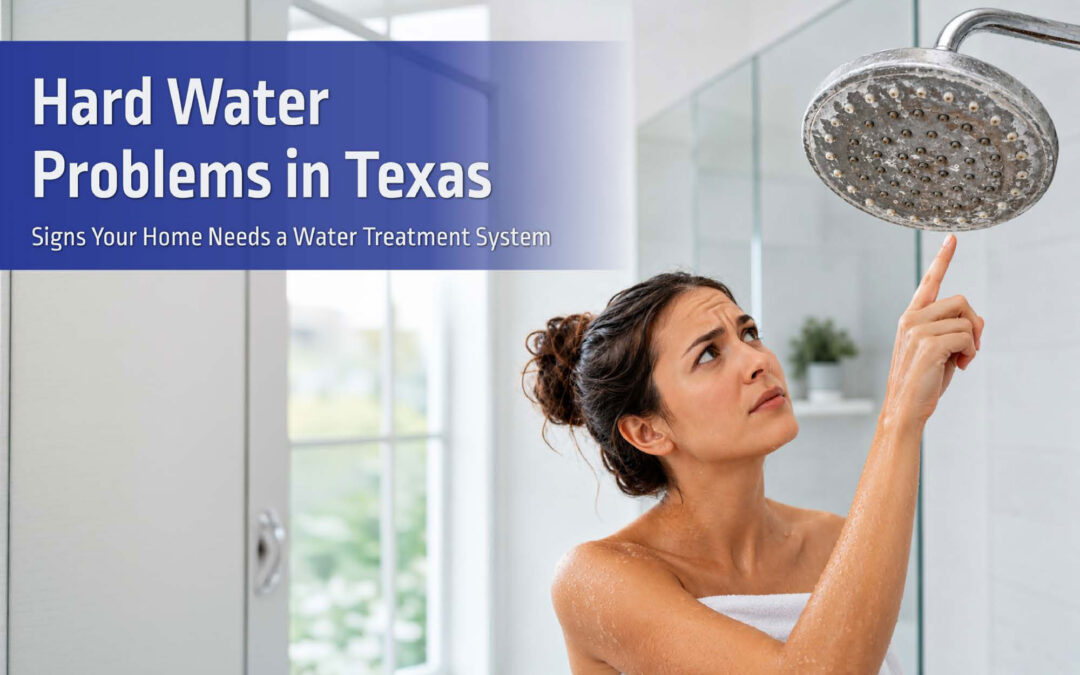
White or crusty deposits around faucets, showerheads, and sink fixtures are caused by mineral scale. As buildup increases, it can restrict water flow and become difficult to remove.
3. Soap Doesn’t Lather Well
Hard water makes it more difficult for soap to produce a rich lather. You may find yourself using more shampoo, body wash, dish soap, or laundry detergent just to get the same results.
4. Dry Skin and Dull Hair
Many homeowners notice that their skin feels dry or itchy after showering and that their hair becomes dull, brittle, or difficult to manage. Hard water minerals can leave behind a residue that prevents soap and shampoo from rinsing away completely.
5. Stiff or Dingy Laundry
Mineral deposits can become trapped in fabric fibers, causing towels to feel rough and clothing to lose its softness and vibrant color over time.
6. Reduced Water Pressure
As mineral deposits accumulate inside pipes and plumbing fixtures, they can gradually restrict water flow. If your home’s water pressure has slowly declined, hard water may be contributing to the problem.
7. Appliances Wear Out Faster
Water heaters, dishwashers, washing machines, coffee makers, and other water-using appliances can all suffer from scale buildup. Over time, this can reduce efficiency, increase energy consumption, and shorten the lifespan of the equipment.
8. You Spend More Time Cleaning
Soap scum, mineral stains, and hard water spots often require extra scrubbing to remove. If you’re constantly cleaning sinks, showers, faucets, or glass doors, hard water may be the culprit.
Key Insight
Most homeowners don’t notice just one sign of hard water—they experience several at the same time. The earlier you recognize these warning signs, the easier it is to protect your plumbing, appliances, and overall water quality.
How Hard Water Affects Your Home and Appliances
The visible signs of hard water are only part of the story. While mineral deposits on faucets and dishes are easy to spot, the most significant effects often occur inside your plumbing system and household appliances. Over time, these hidden deposits can reduce efficiency, increase energy costs, and lead to expensive repairs or premature replacement.
Plumbing Systems
As hard water flows through your home’s pipes, calcium and magnesium gradually accumulate along the interior walls. This mineral buildup can restrict water flow over time, contributing to reduced water pressure and placing additional strain on your plumbing system.
Water Heaters
Your water heater is one of the hardest-working appliances in your home—and one of the most affected by hard water. Mineral scale acts as an insulating layer inside the tank or on heating elements, forcing the unit to work harder to heat water. This can increase energy consumption, reduce efficiency, and shorten the life of the water heater. Over time, homeowners may notice longer recovery times, higher energy bills, and a reduced supply of hot water as mineral buildup continues to accumulate.
Dishwashers and Washing Machines
Hard water can leave mineral residue inside dishwashers and washing machines, reducing their cleaning performance over time. Dishes may come out with cloudy spots, while clothes can feel stiff or appear dull after repeated washing.
Faucets, Fixtures, and Showerheads
Mineral deposits don’t just affect appearance—they can clog aerators, reduce water flow, and make routine cleaning more difficult. Without treatment, scale buildup continues to accumulate, requiring more frequent maintenance.
Key Takeaway
Hard water doesn’t usually cause sudden plumbing failures. Instead, it slowly reduces the efficiency of your home’s plumbing and appliances, leading to higher operating costs and more frequent maintenance over time.
How to Test for Hard Water in Your Home
If you’ve noticed several of the signs discussed above, the next step is determining whether hard water is actually the cause. Fortunately, there are several ways to evaluate your home’s water quality, ranging from simple observations to professional testing.
Look for Common Warning Signs
The easiest way to identify hard water is by paying attention to everyday clues around your home. White spots on dishes, mineral buildup on faucets, soap scum in showers, stiff laundry, and reduced water pressure can all indicate elevated mineral levels.
Use a Home Water Test Kit
Home water hardness test strips are widely available and can provide a quick estimate of your water’s hardness. While these kits can be helpful for identifying potential issues, they may not detect other contaminants that could affect your water quality.
Schedule a Professional Water Test
A professional water analysis provides the most complete picture of your home’s water. In addition to measuring hardness levels, it can identify other factors such as chlorine, sediment, iron, sulfur, and additional water quality concerns. This information helps determine the best solution for your home’s specific needs.
At Quality Home Products of Texas, we offer professional water testing to help homeowners better understand what’s in their water. The results allow our team to recommend a treatment solution based on your home’s specific water conditions rather than a one-size-fits-all approach.
Understanding Water Hardness Levels
Water hardness is typically measured in grains per gallon (GPG). The higher the number, the greater the concentration of calcium and magnesium in your water.
- 0–3.5 GPG: Soft to slightly hard
- 3.5–7 GPG: Moderately hard
- 7–10.5 GPG: Hard
- Over 10.5 GPG: Very hard
Many areas of Texas fall into the hard or very hard categories, making water treatment a worthwhile investment for many homeowners.
Pro Tip
If you’re seeing multiple signs of hard water, don’t wait until an appliance fails to take action. Identifying the problem early can help reduce maintenance costs, improve efficiency, and extend the life of your plumbing and water-using appliances.
Choosing the Right Water Treatment System
Not every home has the same water quality challenges. While some homeowners primarily need to reduce hard water minerals, others may also want to improve the taste, odor, and overall quality of their water. The right solution depends on your home’s water conditions and your family’s needs.
Water Softeners
A water softener removes calcium and magnesium—the minerals responsible for hard water. This helps reduce scale buildup, improves soap performance, protects plumbing, and extends the life of water-using appliances.
Whole House Water Filtration
A whole house water filtration system is designed to reduce contaminants such as chlorine, sediment, and other impurities before water reaches your faucets and appliances. Depending on the system, filtration can improve the taste, odor, and overall quality of your home’s water.
Why Many Texas Homes Benefit From Both
Because hard water and other water quality issues often occur together, many homeowners choose a combination of a water softener and a whole house water filtration system. Together, these systems help address mineral buildup while also improving the quality of the water used for drinking, cooking, bathing, and cleaning.
At Quality Home Products of Texas, we understand that no two homes have identical water quality challenges. That’s why we begin with professional water testing before recommending a solution. Whether your home needs a water softener, whole house water filtration, or a complete water treatment system, our goal is to provide a customized solution that delivers cleaner, better-quality water throughout your home.
Water Treatment System Benefits
Installing the right water treatment system can do more than eliminate hard water problems. It can help protect your home’s plumbing, improve appliance performance, reduce maintenance, and make everyday tasks more enjoyable. While the exact benefits depend on your home’s water quality, many Texas homeowners notice improvements almost immediately.
Protects Your Plumbing
Reducing mineral buildup helps keep water flowing efficiently through your pipes and fixtures. This can minimize scale accumulation and reduce wear on your plumbing system over time.
Extends the Life of Appliances
Water heaters, dishwashers, washing machines, coffee makers, and other water-using appliances can operate more efficiently when they’re not fighting mineral buildup. This may help reduce maintenance needs and extend their lifespan.
Improves Cleaning Performance
Softened water allows soaps and detergents to work more effectively. Many homeowners notice cleaner dishes, brighter laundry, and less soap scum in bathrooms and kitchens.
Softer Skin and Healthier-Looking Hair
Without excess minerals interfering with soap and shampoo, many people find that their skin feels softer and their hair is easier to manage after bathing.
Better-Tasting Water
When paired with whole house water filtration, a water treatment system can help reduce chlorine and other impurities that may affect the taste and odor of your home’s water.
Lower Maintenance Around the Home
Less mineral buildup means less time spent scrubbing faucets, shower doors, sinks, and fixtures. You’ll also spend less money on specialty cleaning products designed to remove hard water stains.
Key Takeaway
The benefits of a water treatment system extend far beyond softer water. By protecting your plumbing, improving appliance efficiency, and enhancing your home’s overall water quality, the right system can provide lasting value for years to come.
Water Softener vs. Whole House Water Filtration
Although these terms are often used interchangeably, a water softener and a whole house water filtration system serve different purposes. Understanding the difference can help you choose the right solution for your home.
| Water Softener | Whole House Water Filtration |
|---|---|
| Removes calcium and magnesium that cause hard water | Reduces chlorine, sediment, and other impurities |
| Helps prevent scale buildup | Improves taste and odor |
| Protects plumbing and appliances | Improves overall water quality |
| Makes soap and detergent work better | Filters water throughout the home |
| Helps soften skin and laundry | Complements a water softener for complete treatment |
For many Texas homeowners, the best solution isn’t choosing one or the other—it’s combining both. A water softener addresses the minerals responsible for hard water, while a whole house filtration system improves the overall quality of the water your family uses every day.
Why Homeowners Choose Quality Home Products of Texas
We don’t believe in one-size-fits-all water treatment. Every recommendation begins with understanding your home’s water quality so we can match you with the right combination of water softening and filtration solutions.
Protect Your Home from Hard Water Problems
Hard water is a common issue for homeowners across Texas, but it doesn’t have to impact your home’s comfort, efficiency, or water quality. Recognizing the signs of hard water early and choosing the right water treatment solution can help protect your plumbing, extend the life of your appliances, and improve your family’s everyday experience.
At Quality Home Products of Texas, we’re committed to helping homeowners find the right solution through professional water testing and customized water treatment systems. Whether you’re looking to reduce hard water, improve your water quality, or both, our experienced team is here to help.
For more than 35 years, Quality Home Products of Texas has helped homeowners throughout Texas improve their water quality with professionally installed water treatment systems. Whether you’re dealing with hard water, chlorine, sediment, or other water quality concerns, our experienced team can evaluate your home’s water and recommend a customized solution that fits your family’s needs.
Frequently Asked Questions
What is hard water?
Hard water is water that contains high levels of naturally occurring minerals, primarily calcium and magnesium. While these minerals are generally safe to drink, they can leave behind scale buildup that affects plumbing, appliances, and everyday cleaning.
Is hard water bad for your health?
Hard water is generally considered safe to drink and isn’t typically harmful to your health. However, it can contribute to dry skin, dull hair, soap scum, and mineral buildup that reduces the efficiency and lifespan of your home’s plumbing and appliances.
How do I know if my home has hard water?
Common signs of hard water include white spots on dishes, scale buildup on faucets and showerheads, soap that doesn’t lather well, stiff laundry, dry skin, dull hair, and reduced water pressure. If you’re experiencing several of these issues, a professional water test can confirm whether hard water is the cause.
Does a water softener remove hard water?
Yes. A water softener is specifically designed to remove the calcium and magnesium minerals that cause hard water. Softened water helps reduce scale buildup, improves soap performance, and protects plumbing and water-using appliances.
What is the difference between a water softener and whole house water filtration?
A water softener removes the minerals that cause hard water, while a whole house water filtration system reduces contaminants such as chlorine, sediment, and other impurities. Many homeowners choose both systems to improve overall water quality throughout their home.
Can hard water damage my appliances?
Yes. Over time, mineral deposits from hard water can build up inside water heaters, dishwashers, washing machines, coffee makers, and other appliances. This buildup reduces efficiency, increases energy use, and may shorten the appliance’s lifespan.
Is hard water common in Texas?
Yes. Many areas of Texas have naturally hard water because groundwater passes through limestone and other mineral-rich rock formations before reaching homes. As a result, hard water problems are common throughout much of the state.
Is a whole house water treatment system worth it?
For many homeowners, a whole house water treatment system can provide long-term value by protecting plumbing, improving appliance efficiency, reducing cleaning time, and enhancing the overall quality of the water used throughout the home.
How often should I have my water tested?
If you’ve never had your home’s water professionally tested—or if you’ve noticed changes in taste, odor, or water quality—it’s a good idea to schedule a water analysis. Testing helps identify hardness levels and other water quality concerns so you can choose the right treatment solution.
How can Quality Home Products of Texas help?
Quality Home Products of Texas offers professional water testing and customized water treatment solutions designed to address your home’s specific water quality needs. Whether you’re dealing with hard water, chlorine, sediment, or other concerns, our team can recommend a solution that helps protect your home and improve your family’s water quality.