

Post-Storm Season Generator Maintenance: What Every Texas Homeowner Should Check This Fall
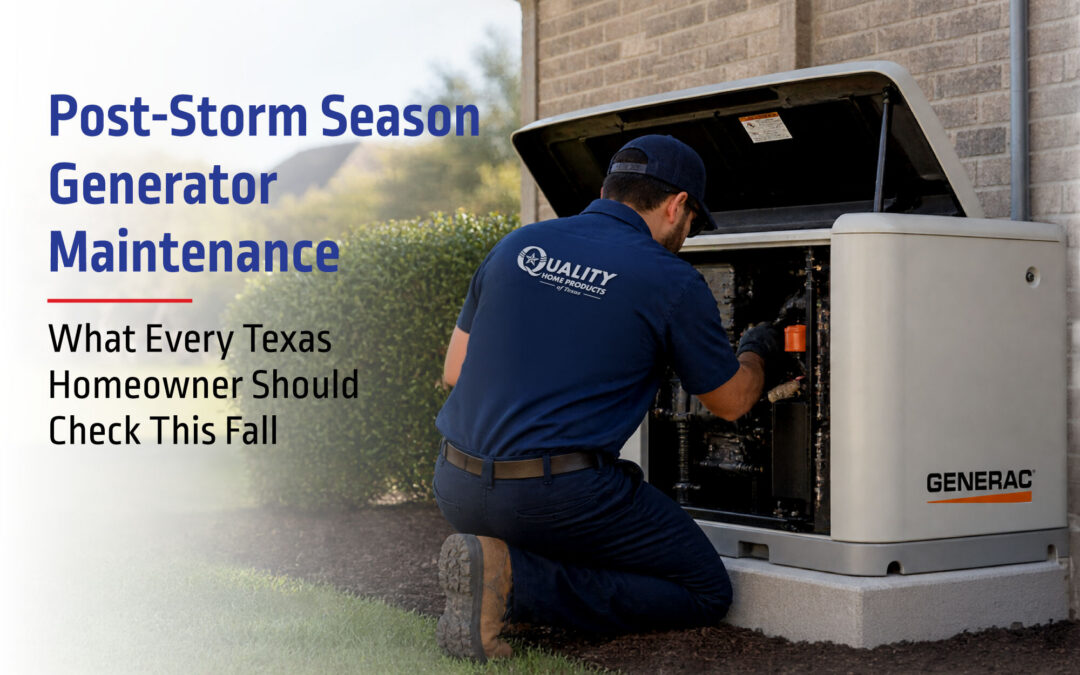
A practical fall generator maintenance guide for Greater Houston homeowners
After a long Texas summer, a standby generator may have spent days carrying a home through outages – or it may have sat outside waiting for a call that never came. Both situations make fall an important time to check the system. A generator that ran hard may have reached a run-hour maintenance interval, while a lightly used unit can still develop battery, fuel, airflow, or maintenance issues over time.
For Greater Houston homeowners, post-storm season maintenance is not about assuming hurricane season is over. It is about using a quieter window to make sure the generator is ready for the next tropical system, thunderstorm, grid interruption, or winter cold snap.
QUICK ANSWER
After storm season, Texas homeowners should check their standby generator’s oil level, battery, filters, spark plugs, fuel supply, enclosure, and control-panel alerts, and review how many hours the generator ran during outages. Whole-home generator maintenance should follow the manufacturer’s time- and run-hour-based schedule. If the generator ran for an extended period, is overdue for service, shows a fault code, or is not starting reliably, schedule professional standby generator service before the next outage.
Table of Contents
- Why Fall Is a Smart Time for Whole Home Generator Maintenance
- Start With Run Hours – Not Just the Calendar
- Generator Maintenance: Calendar vs. Run-Hour Triggers
- Check the Oil After Heavy Generator Use
- Test the Battery Before It Becomes a No-Start Problem
- Clear Debris and Inspect the Generator Enclosure
- Check for Fuel, Oil, and Water Concerns
- Review Filters, Spark Plugs, and Other Service Items
- Confirm AUTO Mode, Alerts, and Exercise Cycles
- What to Check When a Generator Is Not Starting
- How Often Should You Service a Generator?
- Why Professional Standby Generator Service Matters
- Frequently Asked Questions
- Schedule Generator Service Before the Next Outage
QUALITY TIP: DO NOT WAIT FOR THE NEXT OUTAGE
The best time to find a weak battery, overdue maintenance item, warning code, or developing generator problem is while utility power is still on and there is time to schedule service.
Why Fall Is a Smart Time for Whole Home Generator Maintenance
Texas generators work in a demanding environment. Summer heat can be hard on batteries and engine components, while storms can force a standby unit to run for many hours at a time. Even when there are few outages, the generator still sits outdoors exposed to heat, humidity, rain, landscaping debris, insects, and normal aging.
That is why whole home generator maintenance should account for both elapsed time and actual generator use. Quality Home Products of Texas provides generator service, repair, diagnostics, and preventative maintenance throughout the Greater Houston area, including service on many leading residential generator brands.
Start With Run Hours – Not Just the Calendar
One of the first things to review after storm season is how many hours the generator actually ran. Maintenance schedules can include both calendar-based and run-hour-based triggers, so a unit that operated through an extended outage may need attention sooner than expected.
Generac, for example, publishes maintenance intervals for applicable Guardian and Next Generation air-cooled standby generators that include yearly service at 100 hours or one year, Schedule A service at 200 hours or two years, and Schedule B service at 400 hours or four years – whichever comes first. Exact schedules vary by generator, so the owner’s manual for the specific model should always control.
RUN HOURS CAN CHANGE THE MAINTENANCE TIMELINE
A generator that ran continuously for several days can accumulate a large amount of operating time quickly. After an extended outage, check the hour meter or monitoring app and compare the total with the maintenance schedule for your model.
Generator Maintenance: Calendar vs. Run-Hour Triggers
The chart below shows why generator owners should look at both time and usage. The specific intervals shown are examples from Generac’s current published schedule for applicable air-cooled home standby models; other brands and models may differ.
| Maintenance Trigger | Example Timing | What It Can Signal | Fall Action |
| Continuous operation | Every 24 hours while running continuously | Oil level, leaks, louvers/debris | Perform the manufacturer-required continuous-use checks after safe shutdown. |
| Yearly maintenance | 100 hours or 1 year, whichever comes first | Routine inspection/service items | Check whether summer runtime moved the unit to this interval early. |
| Schedule A | 200 hours or 2 years, whichever comes first | Oil/filter and battery-related service items | Schedule service if the unit has reached the applicable interval. |
| Schedule B | 400 hours or 4 years, whichever comes first | Broader scheduled service, including air filter and spark plug items | Use the model-specific manual to confirm everything due. |
Source note: Example intervals are based on Generac’s published maintenance schedule for specified Guardian and Next Generation air-cooled home standby generators. Always follow the owner’s manual for the exact generator model.
Check the Oil After Heavy Generator Use
Oil deserves special attention after an extended outage. Generac’s current continuous-use guidance for applicable air-cooled standby generators calls for checking oil level after every 24 hours of continuous operation, along with inspections for leaks and blocked enclosure louvers. Additional oil and filter service may become due as run hours accumulate.
If the oil is low, the unit has an oil-related alarm, there is evidence of leakage, or you are unsure when the oil and filter were last changed, schedule standby generator service rather than waiting for the next outage. Always follow the manufacturer’s shutdown and cooling procedure before performing any owner-permitted inspection.
Test the Battery Before It Becomes a No-Start Problem
A weak battery is one of the issues that can leave a standby generator unable to start when utility power fails. Texas heat can accelerate battery aging, and a generator battery can lose capacity even when the engine has not accumulated many outage hours.
A fall generator tune-up should include attention to battery condition, charge, terminals, and the charging system as appropriate for the model. Slow cranking, battery alerts, repeated failed exercise cycles, or an older battery are good reasons to have the system checked.
GENERATOR NOT STARTING? START WITH THE DISPLAY
If the generator fails to start, note the exact alarm or error message before resetting anything. That information can help a service technician diagnose whether the problem involves the battery, oil, fuel supply, controls, or another system.
Clear Debris and Inspect the Generator Enclosure
Standby generators need clear airflow. Leaves, grass clippings, mulch, dirt, and storm debris can collect around the enclosure or ventilation openings during the summer. Walk around the unit and make sure the surrounding area is clear without changing required installation clearances.
Also look for obvious storm damage, loose or damaged panels, corrosion, pest activity, or anything that appears to have allowed water into the enclosure. Manufacturer guidance for applicable Generac units includes inspecting enclosure louvers for dirt and debris and checking for water intrusion as part of scheduled maintenance.
Check for Fuel, Oil, and Water Concerns
A whole-home standby generator is connected to a fuel source and the home’s electrical system, so some maintenance belongs with a trained professional. Homeowners can look for obvious signs of trouble, but suspected gas leaks, damaged fuel lines, electrical problems, or recurring shutdowns should not be handled by trial and error.
If you smell gas, see a fluid leak, or notice visible damage, follow the safety instructions for your equipment and contact a qualified service provider. Scheduled professional maintenance can include inspections and tests that go beyond a basic homeowner walk-around.
Review Filters, Spark Plugs, and Other Service Items
Oil is only one part of generator maintenance. Depending on the generator and service interval, maintenance can also involve the oil filter, engine air filter, spark plugs, battery inspection, fuel-system checks, and valve-clearance inspection on models where it applies.
This is another reason “once a year” is not a complete answer to how often to service a generator. The right generator tune-up in Texas depends on the manufacturer’s schedule, total run hours, age of the unit, and operating conditions.
Confirm AUTO Mode, Alerts, and Exercise Cycles
After service or manual operation, confirm that the generator has been returned to the correct ready state. A standby generator normally needs to be in AUTO mode so it can respond automatically when utility power is interrupted.
Review the control panel for warning lights, maintenance reminders, alarms, or fault codes. Then pay attention to the next scheduled exercise cycle. If the generator normally exercises on schedule and suddenly does not, or if it starts and shuts down unexpectedly, the system may need diagnosis.
What to Check When a Generator Is Not Starting
If your generator is not starting, begin with safe observations rather than repeated restart attempts. Check the control-panel message, confirm whether the unit is in the expected operating mode, look for obvious physical damage, and note whether the problem began after an outage, maintenance visit, or exercise cycle.
| What You Notice | Possible Area to Check | Best Next Step |
| Slow or no cranking | Battery/charging system | Have battery condition and charging system checked. |
| Oil-related alarm | Oil level, leak, or pressure-related issue | Follow model instructions for a safe oil-level check; call for service if the alarm remains. |
| Recurring fault code | Controls, sensors, fuel, mechanical, or electrical issue | Record the code and schedule diagnostics instead of repeatedly clearing it. |
| Missed exercise cycle | Settings, battery, fault condition, or service need | Check the display and have the unit inspected if the cause is not obvious. |
Quality Home Products of Texas offers professional generator repair and maintenance for homeowners throughout Greater Houston. Quality states that its technicians can inspect and service generators even when the system was not originally purchased or installed by Quality, whenever service is possible.
How Often Should You Service a Generator?
The safest answer is: follow the maintenance schedule for the exact manufacturer and model, and pay attention to both time and run hours. A generator that has barely run may still be due for calendar-based service, while a generator that operated through a long outage may reach a run-hour interval months ahead of schedule.
For the Generac air-cooled models covered by its current published schedule, yearly maintenance occurs every 100 hours or one year, Schedule A every 200 hours or two years, and Schedule B every 400 hours or four years, whichever comes first. Generac also notes that extreme operating temperatures can change oil-service requirements. These figures should not be applied automatically to every generator brand or model.
THE OWNER’S MANUAL WINS
Maintenance intervals are model-specific. Use charts like the one above to understand the concept, then verify the exact schedule in your generator’s manual or with a qualified service technician.
Why Professional Standby Generator Service Matters
A standby generator combines an engine, fuel system, electrical controls, transfer equipment, and safety systems. Routine professional service helps identify problems that may not be obvious during a homeowner inspection and gives you a chance to address them before emergency power is needed.
Quality Home Products of Texas has served Greater Houston since 1989 and provides generator maintenance, diagnostics, and repair. Quality’s current service information lists preventative maintenance, 1- to 5-year maintenance agreements, extended warranties up to 10 years, and 24/7 on-call emergency service. Its technicians service leading residential generator brands including Generac, Kohler, G.E., and Briggs & Stratton.
Learn more about generator maintenance and service, request generator service or repair, or explore home standby generator options from Quality Home Products of Texas.
Frequently Asked Questions
Does a whole-home generator need maintenance if it did not run much this summer?
Yes. Maintenance can be based on elapsed time as well as run hours. Batteries age, outdoor debris accumulates, and inspections or service may still be due even when the generator had little outage use.
Should I service my generator after a long power outage?
Review the total run hours and the manufacturer’s maintenance schedule after extended use. Long outages can move a generator to an hour-based service interval sooner than expected.
Why is my standby generator not starting?
Possible causes include a weak battery, an active fault or lockout, oil-related conditions, fuel-supply problems, overdue maintenance, or mechanical or electrical issues. Record the control-panel message and schedule service if the cause is not clear or the fault returns.
How often should I service a generator in Texas?
Follow the exact manufacturer and model schedule. Texas heat and heavy outage use can make run hours and operating conditions especially important, so do not rely on the calendar alone.
Can I do generator maintenance myself?
Some basic inspections may be appropriate when the owner’s manual specifically permits them and all safety procedures are followed. Fuel-system, electrical, diagnostic, and more involved maintenance work should be handled by a qualified technician.
Is fall a good time for a generator tune-up in Texas?
Yes. Fall provides an opportunity to address summer wear and storm-season runtime before winter weather or another unexpected outage puts the generator back to work.
Schedule Generator Service Before the Next Outage
The next power outage will not wait for a convenient maintenance appointment. If your generator ran hard this summer, has not been serviced recently, missed an exercise cycle, is showing an alert, or is simply due for preventative maintenance, fall is a practical time to get it checked.
Quality Home Products of Texas serves homeowners across the Greater Houston area with generator maintenance, diagnostics, and repair. Request generator service now so your standby system is ready before the next outage.
READY FOR A FALL GENERATOR TUNE-UP?
Contact Quality Home Products of Texas to schedule standby generator maintenance, diagnostics, or repair before the next severe-weather or winter outage.
Sources
Quality Home Products of Texas – Service & Repair
Quality Home Products of Texas – Maintenance
Generac Support – Home Standby Generator Maintenance Schedule