

How to Protect Your Home During Summer Storms and Power Outages
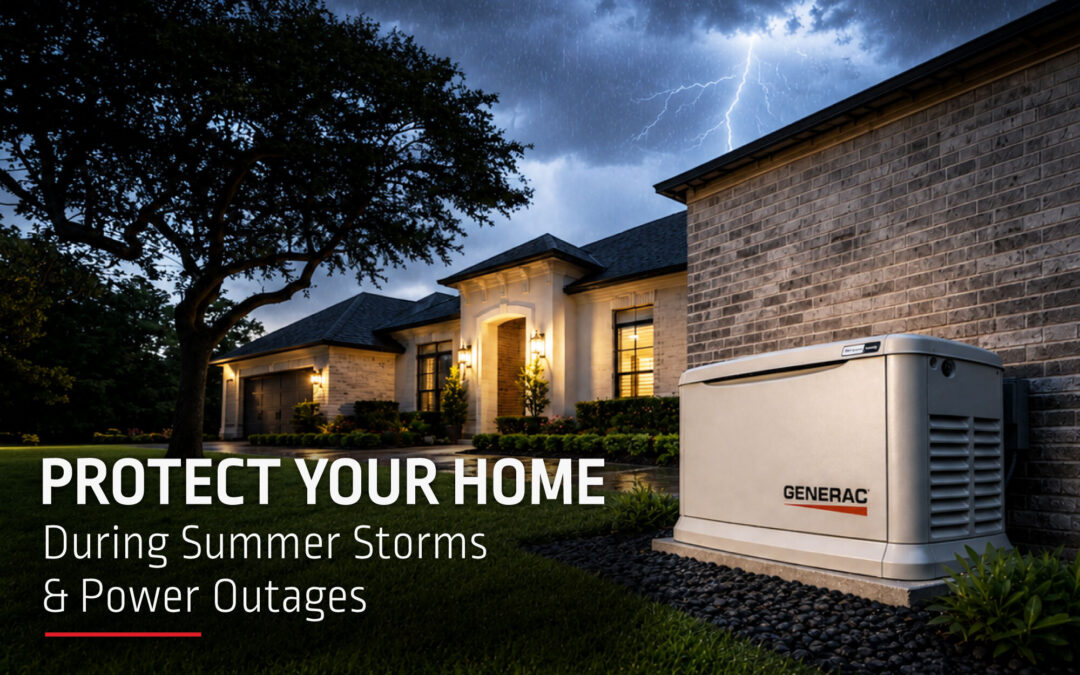
A practical summer storm preparedness guide for Greater Houston homeowners
Summer in Southeast Texas can bring intense heat, thunderstorms, lightning, high winds, heavy rain, and sudden power outages. For homeowners, summer storm preparedness is about more than keeping flashlights nearby. A strong plan helps protect the people in your home, reduce avoidable property damage, and maintain access to the electricity your household depends on.
When the grid goes down, everyday essentials can quickly become concerns. Air conditioning stops, refrigerators begin warming, internet equipment shuts off, security systems may lose normal power, and medical or mobility equipment can be affected. The best time to prepare is before the forecast turns severe.
Table of Contents
- Build a Summer Storm Preparedness Plan
- Protect Electronics and Major Home Systems
- Decide How Your Home Will Handle a Power Outage
- Understand Your Backup Power Options
- Why a Home Backup Generator Can Change Storm Preparation
- Size Backup Power Around the Home – Not a Guess
- Do Not Wait Until the Next Storm to Think About Maintenance
- Make Safe Generator Operation a Priority
- Create a 24-Hour and 72-Hour Outage Plan
- Prepare the Rest of the Home, Too
- Why Houston Homeowners Choose Quality Home Products of Texas
- Frequently Asked Questions
- Prepare Before the Power Goes Out
QUALITY TIP: PREPARE BEFORE THE FORECAST CHANGES
Storm preparation is most effective when supplies, backup power, maintenance, and household plans are handled before severe weather is approaching.
Build a Summer Storm Preparedness Plan
A useful plan starts with the basics. Make sure everyone in the household knows where emergency supplies are stored, how to receive weather alerts, where to shelter during severe weather, and what to do if the power remains out for an extended period.
- Keep flashlights, fresh batteries, portable chargers, first-aid supplies, bottled water, and shelf-stable food accessible.
- Charge phones and backup battery packs before severe weather arrives.
- Know how to safely shut off utilities if emergency officials instruct you to do so.
- Keep important phone numbers and insurance information available even if internet service is interrupted.
- Create a plan for pets, older family members, children, and anyone who relies on powered medical equipment.
Protect Electronics and Major Home Systems
Lightning and utility disturbances can create damaging electrical surges. Unplugging sensitive electronics when it is safe to do so can reduce exposure, while professionally installed surge protection can provide another layer of protection for connected equipment.
Before storm season, homeowners should also check exterior drainage, remove loose outdoor items, trim hazardous branches where appropriate, and make sure gutters and downspouts can move water away from the home. These steps will not prevent every storm-related problem, but they can reduce common risks.
Decide How Your Home Will Handle a Power Outage
One of the most important parts of protecting your home during storms is deciding what you need to keep powered. A short outage may be an inconvenience. An extended outage during a Texas summer can be much more disruptive because cooling, refrigeration, communications, lighting, and other essential systems may all depend on electricity.
POWER OUTAGE PLANNING QUESTION
If your home lost power tonight and service did not return until tomorrow – or several days from now – which systems would you consider essential? Start your backup-power plan with that list.
Understand Your Backup Power Options
Homeowners have several power outage solutions, and the right choice depends on the home, the loads you want to support, budget, fuel availability, and how much automatic protection you want.
| Option | Typical Role | Automatic? | Key Consideration |
| Portable generator | Selected appliances/equipment | No | Manual setup and safe operation |
| Home battery backup | Selected or broader home loads | Can be | Quiet, fuel-free stored electricity |
| Standby generator | Essential circuits or wholehome needs | Yes | Permanent automatic backup power |
Why a Home Backup Generator Can Change Storm Preparation
A permanently installed home backup generator can automatically provide power when utility service fails. Instead of waiting until an outage begins and then setting up temporary equipment, a standby system is designed to detect the interruption and provide backup electricity through the home’s electrical system.
For Houston-area homeowners, that can help keep important household functions available during an outage. Depending on system design and capacity, backup power may support air conditioning, refrigeration, lighting, internet equipment, security systems, pumps, and other selected circuits or whole home loads.
AUTOMATIC BACKUP POWER
A standby generator is permanently installed outside the home and can start automatically when utility power is interrupted. Proper system sizing and professional installation are critical to determining what the generator can support.
Size Backup Power Around the Home – Not a Guess
Generator sizing should be based on the electrical demands of the home and the homeowner’s priorities. Bigger is not automatically better, and an undersized system may not support the loads a homeowner expects.
A professional assessment can account for major appliances, HVAC equipment, starting loads, electrical service, fuel supply, and whether the homeowner wants essential-circuit coverage or broader whole-home protection.
Do Not Wait Until the Next Storm to Think About Maintenance
Already own a generator? Routine generator service and maintenance should be part of your storm preparedness plan. A generator that has been sitting outside for months still needs to be ready to operate when an outage occurs.
Maintenance requirements vary by manufacturer and model, but periodic inspections, oil and filter service, battery checks, and attention to alerts or fault codes can help identify problems before emergency power is needed.Make Safe Generator Operation a Priority
Generators must always be operated according to manufacturer instructions and applicable safety requirements. Portable generators should never be operated inside a home, garage, or other enclosed space because of the risk of carbon monoxide poisoning. Permanently installed standby generators also require proper placement, fuel connections, electrical work, permits where applicable, and professional installation.
Homeowners should never attempt improvised connections to a home’s electrical system. Proper transfer equipment is essential for protecting the household and utility workers.
Create a 24-Hour and 72-Hour Outage Plan
Thinking in time blocks makes emergency planning more practical. Ask what your household would need during the first few hours without power, then consider what changes if the outage lasts one day or several days.
| First Few Hours | Up to 24 Hours | 24-72+ Hours |
| Lighting, phone charging, weather alerts, immediate safety | Cooling, refrigeration, food safety, communications, medical needs | Sustained cooling, power availability, food, water, work and household continuity |
Prepare the Rest of the Home, Too
Emergency power is important, but complete summer storm preparedness includes the entire home. Before severe weather, secure outdoor furniture and decorations, inspect doors and windows, clear drainage areas, verify smoke and carbon monoxide alarms, and keep vehicles fueled or charged.
If you leave town during storm season, avoid assuming that an empty home is protected simply because no one is there. Refrigeration, security equipment, climate control, drainage equipment, and other systems may still matter while you are away.
A BETTER STORM PLAN HAS LAYERS
Supplies help you respond. Home maintenance reduces preventable risks. A household emergency plan keeps everyone informed. Reliable backup power can help the home continue functioning when the grid cannot.
Why Houston Homeowners Choose Quality Home Products of Texas
Quality Home Products of Texas has served Greater Houston homeowners since 1989 and provides home improvement solutions including standby generators, backup battery systems, water treatment, and tankless water heaters. The company also provides generator installation, service, repair, and maintenance.
Learn more about Quality Home Products of Texas and its decades of service to the Greater Houston area.
Want to hear directly from customers? Read Quality Home Products of Texas Google reviews to see experiences shared by local homeowners.Frequently Asked Questions
What should I do first when the power goes out during a summer storm?
Confirm that everyone is safe, use flashlights rather than open flames, check trusted utility and weather alerts, and avoid downed power lines. If you have backup power, follow the equipment manufacturer’s operating and safety instructions.
Is a standby generator automatic?
Standby generators are designed to detect a utility outage and start automatically through an installed transfer system. The exact operation depends on the generator and installation.
Can a home backup generator power my air conditioner?
It can, if the generator and electrical system are properly sized and configured for the HVAC load. Air conditioning equipment can have significant electrical demand, so professional load calculations are important.
How often does a standby generator need maintenance?
Maintenance schedules vary by manufacturer, model, usage, and operating conditions. Homeowners should follow the manufacturer’s schedule and arrange professional service as recommended, especially before periods when severe weather is more likely.
When is the best time to install a standby generator?
Before you need it. Planning ahead gives homeowners time to evaluate electrical loads, select equipment, address installation requirements, and make sure the system is ready before severe weather threatens the area.
Prepare Before the Power Goes Out
Summer storms are part of life in Greater Houston, but being without a plan does not have to be. Preparing supplies, protecting the home, understanding your electrical priorities, and choosing a dependable emergency power solution can make an outage far easier to manage.
If you are considering a standby generator or want to make sure your existing generator is storm-ready, Quality Home Products of Texas can help you evaluate your options and prepare your home before the next outage.
READY TO PREPARE YOUR HOME FOR THE NEXT OUTAGE?
Contact Quality Home Products of Texas to learn more about standby generator installation, service, and home backup power options.